
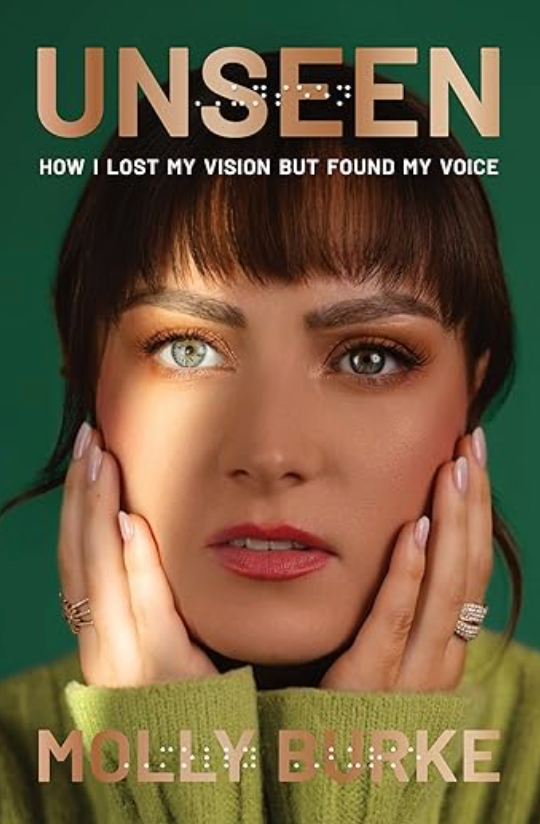
Unseen: How I Lost My Vision but Found My Voice – An Engaging Journey with Molly Burke
Ever since I first discovered Molly Burke through her previous audiobook, It’s Not What It Looks Like, I’ve been captivated not just by her story, but by her spirit. As I opened the pages of Unseen, I was met with an eager anticipation mixed with the pride of seeing someone I admire take a bold leap into sharing her deeper, more impactful narrative. This book feels like a heartfelt extension of her advocacy for the disability community, and I’m thrilled to delve into it.
At its core, Unseen is a reflection on vision—both literal and metaphorical. Molly’s journey through losing her sight unfolds in a way that feels both intimate and universal. She doesn’t just recount the raw realities of her disability; she also shines a light on societal perceptions of disability, revealing how often they shape our understanding of worth. I felt a personal connection to her when she said that the most challenging part of being disabled is often the way society chooses to treat its disabled members—not just as equal individuals, but often as burdens. It’s a point she feasts on beautifully throughout the book, driving home the reality that anyone can become disabled at any moment, yet we often remain blind to the needs of those living with disabilities today.



Molly’s advocacy doesn’t just inform; it inspires. I appreciate that she makes her work accessible in myriad ways—from having it printed in Braille to recording the audiobook herself, she truly practices what she preaches about inclusivity. Seeing her create a space that extends beyond her experience to accommodate others was incredibly moving. It resonated with me on a personal level, amplifying my own desire to advocate for accessibility in various aspects of life.
While the writing is conversational and relatable—almost akin to chatting with a friend over coffee—I did notice some moments where it falters in terms of literary finesse. Certain passages felt repetitive, and the advocacy sometimes blurred into ideas that, while valid, touch on contentious cultural conversations. For example, her views on disability representation in media stirred a bit of personal reflection for me. I could see where she’s coming from; however, I also hold onto the belief that an actor’s ability to portray another’s experience is a vital part of their craft, even if the industry often overlooks those with disabilities.
Molly’s voice shines through as authentic and unwavering, and I adore that she encourages authenticity over perfection. This book reminds readers—and perhaps herself—that it’s okay not to fit into a mold but to carve out our own path, even when our opinions diverge from the mainstream.
In conclusion, Unseen is a book I wholeheartedly recommend to anyone looking to deepen their understanding of disability and advocacy. It’s a beacon of hope in an often blinding world that sometimes forgets the value of inclusivity. For those searching for inspiration and a call to action, this memoir won’t just be a read; it might just resonate in a way that sparks change.
4.2 stars* – a genuine, engaging read that left me reflecting on the world around me and hopeful for a more accepting future. Molly is a force to be reckoned with, and I can only imagine the ripple effect her words will have.
Discover more about Unseen: How I Lost My Vision but Found My Voice on GoodReads >>