
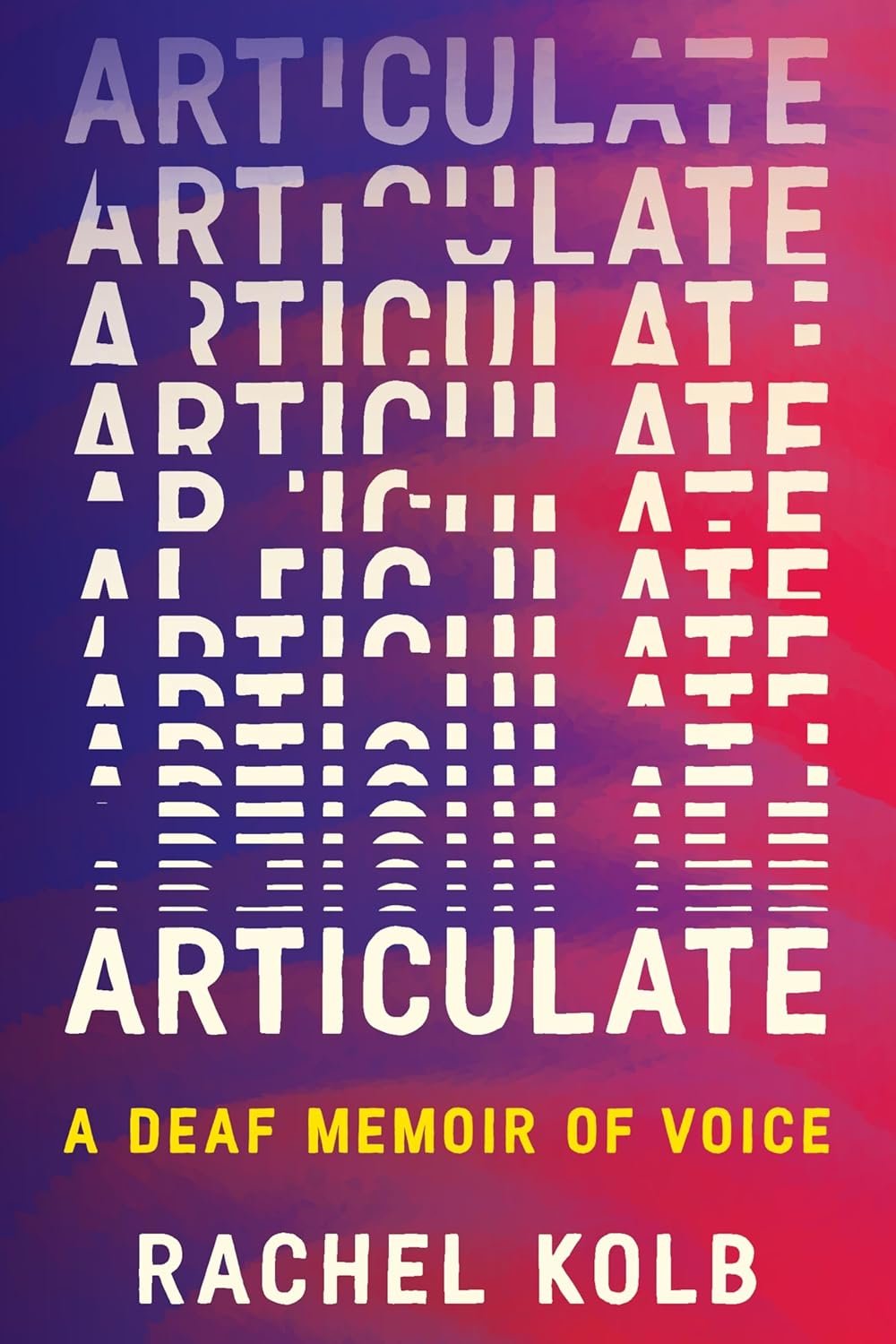
Articulate: A Deaf Memoir of Voice by Erin Kolb caught my attention because, as someone who has been profoundly deaf since infancy and received a cochlear implant early on, I was curious about another d/Deaf individual’s journey. I often wonder how different experiences shape our understanding of identity and community. Kolb’s memoir promised to offer insights into her life in a way that seemed both relatable and enlightening. However, while I found some of her storytelling engaging, I also encountered moments that left me conflicted.
The memoir navigates the complexities of growing up d/Deaf, detailing Kolb’s experiences with speech therapy, social exclusion, and the challenges of lip-reading. Her explanations of speech therapy and the intricacies of navigating a d/Deaf life struck a chord with me, reminding me of my own journey and the hurdles I’ve faced. Yet, I was disappointed by the sporadic presentation of these insights. It felt like a missed opportunity to lay a strong foundation early on, helping readers grasp the nuanced struggles many d/Deaf individuals encounter. For example, lip-reading, a critical skill for d/Deaf individuals, was introduced quite late in the narrative, which diminished its significance in my eyes.
One notable point of discomfort for me was Kolb’s portrayal of her upbringing. Though she hints at privilege—attending elite institutions like Stanford and Oxford—she often glosses over how this shaped her perspective on her d/Deaf identity. I couldn’t help but sense a disconnection between her experiences and those of others in the d/Deaf community, especially when she compares issues faced in d/Deaf schools to the harrowing histories of Indigenous Peoples. This comparison struck me as tone-deaf and oversimplified, showcasing a lack of sensitivity to the gravity of cultural erasure.




Kolb’s frequent references to Harry Potter throughout the memoir felt particularly heavy-handed, especially given the author’s controversial views on the LGBTQ+ community. She seemed almost oblivious to the implications of her repeated allusions, making me question her awareness of the broader narrative surrounding disability representation in literature. It was jarring to engage with a memoir that, at times, felt more focused on cultural triumphs rather than delving into the systemic issues that often permeate our lives as d/Deaf individuals.
As I continued reading, I felt a growing frustration with Kolb’s passive responses to challenging situations. For instance, witnessing bullying towards a cochlear implant user without intervening was troubling. I found myself wanting a more proactive approach from her. While she does learn to advocate for herself later in life, her early reluctance seemed contradictory to the strength I believe is innate in our community.
Despite my grievances, there were moments of authenticity that shone through Kolb’s words. The struggle to navigate friendships and social outings as a d/Deaf person resonated with me; I too have grappled with exclusion and the need for better accommodations. This memoir does prompt readers to consider these realities, even if the exploration feels at times superficial.
In conclusion, Articulate may resonate with readers who are looking for a glimpse into the life of a d/Deaf individual but might fall short for those hoping for a deeper exploration of the complexities within the d/Deaf community. While Kolb has a unique voice, the lapses in sensitivity and context left me feeling disconnected. If you’re interested in memoirs that intertwine privilege, identity, and disability, this book may spark discussion, but do approach it with a critical lens. For those of us in the d/Deaf community, we might find more fulfillment in narratives that fully respect and explore the multifaceted aspects of our lives.
Discover more about Articulate: A Deaf Memoir of Voice on GoodReads >>