
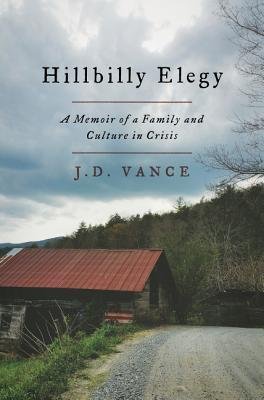
A Journey Through Hillbilly Elegy: A Memoir Full of Heart and Contradiction
Vance’s Hillbilly Elegy caught my eye not just for its intriguing title, but because it speaks to a tapestry of cultural narratives that resonate deeply with my own experiences. Growing up near Muncie, Indiana, I couldn’t help but feel a personal connection to the very world Vance describes. As I dove into his memoir, I found myself grappling with the complex emotions surrounding class, identity, and the deep-rooted cultural values that both bind and isolate us.
At the heart of Vance’s narrative is a family characterized by immense love yet marred by dysfunction. His mother’s struggles with addiction and domestic violence serve as a backdrop to his overarching theme: the cyclical nature of poverty and resilience. I couldn’t help but reflect on my own family dynamics—how we too shared a complicated blend of hard work and aspiration, albeit with a notably different emotional landscape. Vance’s storytelling deftly weaves humor and tragedy, painting a vivid picture of his “hillbillies” in small-town America. His fierce loyalty to family, especially to his formidable “Mamaw,” is both admirable and perplexing, shining a light on the fierce protectiveness often found in such communities.
The writing style is candid and approachable, with Vance’s sardonic humor often cutting through the weight of his realities. This accessibility strengthens the memoir’s impact, making complex social issues digestible and poignant. A memorable line that resonated with me was when Vance discussed the notion of “a strong Protestant Work Ethic without work.” It encapsulates a sentiment many of us struggle with as we ponder the fragility of the American Dream, particularly in post-industrial settings like Middletown, Ohio.


Yet, as I absorbed his reflections, I found myself grappling with moments of frustration. At times, Vance’s generalizations about the “poor” felt reductive—painting individuals with broad strokes without fully considering the socio-economic and historical contexts that shape their lives. His critique often veers toward blaming personal failure rather than examining systemic barriers, a point I wished he had explored more deeply. It led me to question the balance between personal responsibility and societal influences, a dance many of us know hit too close to home.
Hillbilly Elegy is ultimately an invitation to understand and empathize with those straddling the line between working-class struggle and middle-class aspiration. It’s a challenging reflection on how culture, history, and geography converge in our lives, crafting identities both similar and disparate.
I believe this memoir will resonate particularly with readers seeking insight into the complexities of American life. It’s noteworthy not only for its storytelling but for the broader conversations it sparks around class dynamics and cycles of poverty. While it may not provide all the answers, it certainly prompts much-needed dialogue on these pressing issues.
In the end, reading Hillbilly Elegy was an experience that left me both enriched and contemplative. It reminded me of the power of storytelling to forge connections and illuminate paths toward understanding, even amidst our differences. If you’re ready to reflect on what it means to come from a place, both personally and culturally, this memoir is a must-read.
Discover more about Hillbilly Elegy: A Memoir of a Family and Culture in Cr… on GoodReads >>