
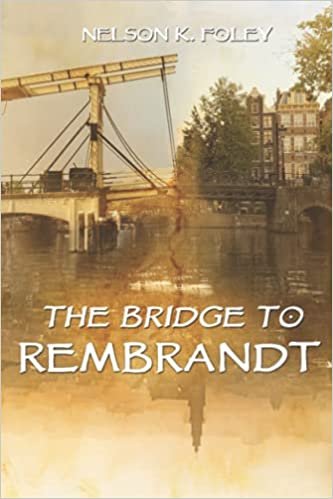
The Bridge to Rembrandt by H. L. Swanson: A Journey through Time and Emotion
When I stumbled upon The Bridge to Rembrandt by H. L. Swanson, I felt an immediate pull. Time travel, love, and the art world? It sounded like a charming cocktail for an engaging read! As I delved into its pages, I found myself not only transported through time but also wrestling with my own life decisions alongside the protagonist, Robert.
At its core, The Bridge to Rembrandt is about choices and second (or third, or fourth) chances. Robert, an events organizer juggling a complex life of messy relationships and a not-so-legal art business, finds himself at a café in Amsterdam when he suddenly crosses into a whirlwind of pasts, each centered around a woman named Saskia. Ah, the romantic entanglement that almost everyone can relate to in one form or another! I found myself reflecting on how our past choices shape us, whether in love or career. Robert’s interactions with various iterations of Saskia are particularly poignant, echoing our own journeys of self-discovery.
One of the things I appreciated most about Swanson’s writing is how adeptly he blends humor with deeper themes. For instance, when Robert encounters a new Saskia while battling his diabetic condition, the tension is palpable. The author balances this with light-hearted moments that make the characters relatable. I admired Robert’s “predictions” of events – a clever narrative tool that allows us to experience the tension of knowing what’s coming while keeping the story fresh and unpredictable.




Another highlight was the vivid portrayal of Amsterdam. The city’s charm bounced off the pages, making me feel as if I were walking alongside Robert on the Brouwersgracht, perhaps contemplating my own choices over a cup of coffee. The setting serves as a perfect backdrop for the exploration of love and history; each time period Robert visits reveals layers of emotional complexity that resonate with readers long after they’ve turned the last page.
Though we never fully understand the mechanics of Robert’s time travel, Swanson writes with such confidence that it doesn’t matter. It feels dreamlike, almost surreal. For me, this aspect added a layer of whimsical intrigue that enhanced rather than hindered the narrative.
The pacing kept me on my toes; just when I thought I understood Robert’s journey, Swanson flipped the script. The juxtaposition of life in 1945, 1886, and the 17th century, along with the historical events—the Dam Square Massacre, the Eel Riot, and the Plague—creates a rich tapestry that feels both educational and thrilling.
In conclusion, I would recommend The Bridge to Rembrandt to anyone who enjoys time travel, art, and intricate explorations of love. It’s a beautifully crafted story that perfectly blends history with heart, making it a compelling read for fans of literary fiction and romantic escapades alike. After experiencing Robert’s journey, I couldn’t help but reflect on my own life—what would I do if I could travel back in time? Perhaps I’d seek out connections, just like he does, and maybe even indulge in a few historical mysteries of my own.
So grab your copy, settle in, and prepare for a delightful journey through love, art, and the timeless quest for understanding ourselves.
Discover more about The Bridge to Rembrandt on GoodReads >>