
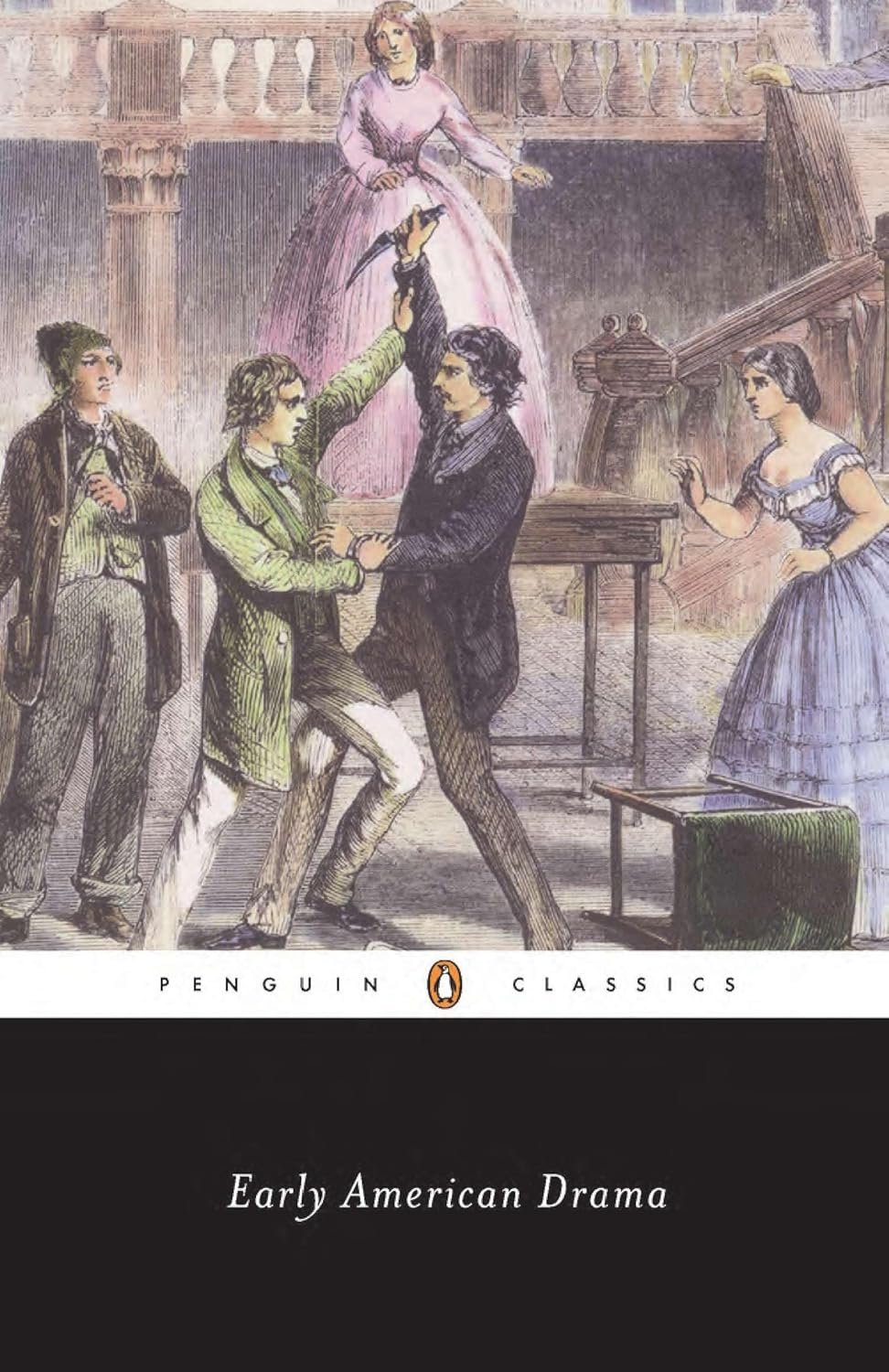
Exploring American Roots Through Early Drama: A Review of Early American Drama (Penguin Classics)
I can still recall the thrill of discovery when I stumbled upon Early American Drama, edited by Jeffrey H. Richards. As someone who often grapples with the question of where American theater originates, this book felt like a treasure trove waiting to be unearthed. The opportunity to delve into the works of playwrights like Royall Tyler and Anna Cora Mowatt sparked a curiosity that quickly turned into an engaging literary journey.
This unique collection features eight impactful plays from the late 18th to mid-19th centuries that reflect the rich tapestry of American life, culture, and emerging identity. From Tyler’s sharp satire in The Contrast to Mowatt’s witty social commentary in Fashion, each piece captures its own distinct flavor while addressing universal themes—identity, race, and morality. I found myself immersed in a spectrum of human experiences, framed within the evolving context of America’s historical landscape.





Take, for instance, the poignant tragedy The Gladiator by Robert Montgomery Bird, where the struggles against slavery echo through the ages, resonating deeply even in today’s societal discussions. Boucicault’s The Octoroon, while controversial, invites readers to grapple with racial dynamics long before contemporary dialogues arose, making it an essential read for anyone interested in the progression of American cultural commentary.
Richards has done an admirable job in his editorial role, providing insightful introductions to each play that richen the reading experience. His academic lens does occasionally lean toward the scholarly, which may alienate some casual readers. However, it undeniably frames these plays in a contextual richness that invites deeper understanding. As one reviewer pointed out, discovering the underlying themes of racial anxieties and gender politics brought a profound new lens through which to view America’s past and present.
The writing style of these plays can sometimes feel archaic, as expected, but it’s this very quality that adds to their charm. Reading them is like stumbling upon an old letter from a friend, where the words carry not just the plot, but also the weight of time and tradition. The pacing varies, but each piece lends itself to both reading and performance, allowing you to imagine the laughter and tears shared by audiences long gone.
One memorable line from Uncle Tom’s Cabin, adapted by George Aiken, resonates with urgency and compassion: "I’ll be free or die!" This battle cry encapsulates the fight for dignity and freedom that feels just as relevant today. It’s little moments like these that stick with you, echoing long after you’ve turned the last page.
Early American Drama is a vital recommendation for history enthusiasts, theatre aficionados, or anyone curious about how the complexities of identity and society were contemplated long before contemporary debates emerged. Whether you dive into it out of academic necessity or a personal quest, I assure you, it offers a rich tapestry of American heritage. For me, it wasn’t just a reading experience; it was a reconnection with my cultural roots, illuminating the threads that weave our national narrative together.
In a world that often overlooks the past, picking up these plays feels like giving a voice to the silenced, and I encourage everyone to join this literary revival. You just might find yourself enchanted by the brilliance of early American dramatists.
You can find Early American Drama (Penguin Classics) here >>